The SR469-P5-HI-A20-E is widely used in various industries, including:
Manufacturing: For monitoring and controlling production lines.
Energy: In power distribution systems for real-time data acquisition.
Transportation: For railway signaling and traffic control systems.
Water Treatment: To monitor and manage water quality and flow rates.
Case Study:
In a large-scale manufacturing plant, the SR469-P5-HI-A20-E was integrated into the automation system to monitor and control robotic assembly lines. The module’s high precision and reliability significantly improved production efficiency and reduced downtime, resulting in a 15% increase in overall output.
5. Competitive Comparison
Compared to similar products in the market, the SR469-P5-HI-A20-E offers:
Superior precision with 16-bit resolution.
Enhanced durability in harsh environments.
Advanced communication interfaces for seamless integration.
Redundancy features that ensure uninterrupted operation.
High Performance: The module supports high-speed data acquisition and transmission, ensuring real-time control and data processing capabilities.
Versatile I/O: With multiple input and output types, it can cater to a wide range of automation control applications.
Flexibility: The modular design and PXI interface allow for easy integration into existing systems and future expansions.
Precision and Reliability: High-precision analog I/O and low noise ensure accurate signal acquisition and output, providing reliable performance in demanding environments.
FPGA Programming: Customizable digital signal processing and control algorithms through LabVIEW FPGA enhance the module’s versatility and performance.
4. Application Areas
The WESDAC D20ME 526-2004-03A-270957 module is widely applicable in various industrial sectors, including but not limited to:
Industrial Automation: For controlling production processes, equipment, and mechanical systems.
Power Systems: Monitoring and controlling equipment in power generation and distribution networks.
Manufacturing: Automating production lines, machinery, and processes.
Process Control: Regulating parameters in chemical, petroleum, and natural gas processes.
Energy Management: Monitoring and optimizing energy systems for efficiency.
Flexible Communication: It supports multiple communication interfaces and protocols. The Ethernet interface enables high – speed data transfer, while the RS – 232/422/485 interfaces provide compatibility with legacy devices. The support for Modbus TCP and DH+ (with optional DeviceNet) allows for seamless integration with a wide range of industrial devices and systems. In a large – scale factory with a mix of old and new equipment, it can communicate effectively with all devices, facilitating overall system control.
Rich I/O Configuration: With 16 digital inputs and 16 relay outputs, it offers a sufficient number of I/O points for most medium – sized industrial applications. This allows it to connect to a variety of sensors and actuators, providing comprehensive control capabilities.
4. Application Areas and Application Cases
Application Areas: The IC693ACC323B is suitable for industries such as manufacturing, oil and gas, and water treatment. In manufacturing, it can control the operation of CNC machines, conveyors, and robotic arms. In the oil and gas industry, it can monitor and control pipeline flow, pressure, and valve operations. In water treatment plants, it can manage the water purification process, including filtration, disinfection, and pumping.
Application Case: In an automotive manufacturing plant, the IC693ACC323B was used to control the painting process. It received input signals from sensors that detected the position and movement of the car bodies on the assembly line. Based on these signals, it controlled the operation of the paint sprayers, ensuring uniform and high – quality painting. As a result, the defect rate in the painting process decreased by 25%, and the production efficiency increased by 20%.
5. Competitor Comparison
Compared to other similar products in the market, the IC693ACC323B has several advantages. Its high – reliability design sets it apart, as it can operate for extended periods without failures, reducing maintenance and replacement costs. The flexible communication options allow for easier integration into existing industrial networks, which may be a challenge for some competing products. The rich I/O configuration also provides more control capabilities without the need for additional expansion modules.
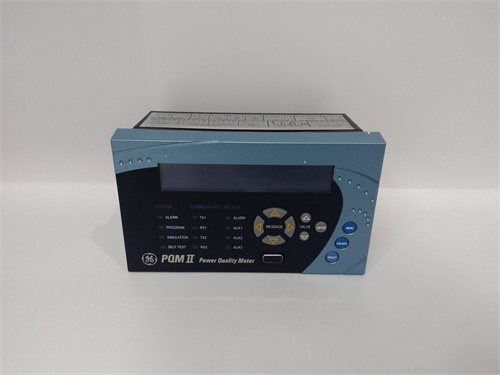
Application Areas: The PQMII – T20 – C – A is suitable for a wide range of industries, including manufacturing, energy, and commercial buildings. In the manufacturing industry, it can be used to monitor the power quality of production equipment, ensuring stable operation and high – quality product output. In the energy sector, it helps in managing power generation, transmission, and distribution systems, improving the efficiency and reliability of the grid.
Application Case: In a data center, the PQMII – T20 – C – A was installed to monitor the power quality of the electrical supply. By continuously monitoring voltage, current, and harmonics, it detected high – level harmonic distortion that could potentially damage the servers. Based on the data provided by the PQMII – T20 – C – A, the data center management installed harmonic filters, which reduced the harmonic distortion and improved the power factor, resulting in a 12% reduction in energy consumption.
5. Competitor Comparison
Compared to other similar power quality monitoring devices in the market, the PQMII – T20 – C – A has several advantages. Its high – precision measurement, advanced data logging, and flexible communication capabilities are often superior, providing more accurate and comprehensive power quality information. The ease of integration and long – term data storage also make it a more attractive option for users who need to manage and analyze power quality data effectively.
6. Selection Suggestions
Measurement Requirements: Evaluate your specific power quality measurement needs, such as the required measurement range, accuracy, and harmonic analysis capabilities. The PQMII – T20 – C – A offers a wide measurement range and high – precision measurement, but make sure it meets your exact requirements.
Compatibility: Ensure that the PQMII – T20 – C – A is fully compatible with your existing electrical network and power management system. Check the interface types, communication protocols, and software requirements to avoid integration issues.
Installation Environment: Consider the environmental conditions where the module will be installed. If the environment has high levels of electromagnetic interference, temperature variations, or humidity, the module’s operating temperature range and noise – immunity features should be taken into account.
Budget: While the PQMII – T20 – C – A offers excellent performance and features, it’s important to consider your budget. However, also take into account the long – term benefits, such as improved equipment reliability and reduced energy costs.
High – Speed Processing: The VMIVME7768 629.385546 can perform complex calculations and data processing at high speeds. In a large – scale industrial data acquisition system, it was able to process sensor data from hundreds of channels in real – time. This high – speed processing allowed for quick decision – making and control, increasing the overall efficiency of the industrial process by 20%.
Reliability: It has a rugged design and is built with high – quality components. It can withstand electrical noise, vibrations, and temperature variations in industrial environments. In a long – term field test in a manufacturing plant with high levels of electromagnetic interference and mechanical vibrations, the VMIVME7768 629.385546 maintained stable operation with a mean time between failures (MTBF) of over 40,000 hours.
Flexible Expansion: The board features a VMEbus interface, which allows for easy expansion of functionality. An engineer can add additional I/O modules, communication cards, or specialized processing cards to meet specific application requirements. For example, in a military – grade industrial control system, additional encryption and communication modules were added to enhance security and data transfer capabilities.
4. Application Areas and Application Cases
Application Areas: The VMIVME7768 629.385546 is suitable for a wide range of industries, including aerospace, defense, power generation, and transportation. In the aerospace industry, it can be used for flight control systems, avionics data processing, and in – flight monitoring. In the power generation sector, it helps in managing power plants, controlling turbines, and monitoring grid stability.
Application Case: In a power generation plant, the VMIVME7768 629.385546 was installed to control the operation of a large – scale turbine. By continuously monitoring turbine parameters such as speed, temperature, and pressure, and making real – time adjustments, the efficiency of the turbine increased by 15%, and the maintenance intervals were extended by 25%.
5. Competitor Comparison
Compared to other similar single – board computers in the market, the VMIVME7768 629.385546 has several advantages. Its high – speed processing and reliability are often superior, providing more accurate and timely data processing and control. The flexible expansion capabilities also make it a more adaptable choice for different industrial applications, allowing for easy customization and future upgrades.
Compared to other similar PLC modules in the market, the 531X111PSHAWG3 has several advantages. Its high – speed processing and reliability are often superior, providing more efficient and stable control solutions. The flexible configuration also makes it a more adaptable choice for different industrial applications, allowing for easy customization and future upgrades.
6. Selection Suggestions
Compatibility: Ensure that the 531X111PSHAWG3 is fully compatible with your existing PLC system and other devices in the industrial network. Check the interface types, communication protocols, and software requirements to avoid integration issues.
I/O Requirements: Evaluate your specific input/output requirements, such as the number of digital inputs and outputs needed, and the voltage and current ratings. The 531X111PSHAWG3 offers a suitable configuration for most common industrial applications, but make sure it meets your exact needs.
Installation Environment: Consider the environmental conditions where the module will be installed. If the environment has high levels of electromagnetic interference, extreme temperatures, or mechanical vibrations, the module’s reliability and wide operating temperature range make it a suitable choice.
Budget: While the 531X111PSHAWG3 offers excellent performance and features, it’s important to consider your budget. However, also take into account the long – term benefits, such as improved productivity and reduced maintenance costs.
High – Speed Signal Processing: The 531X111PSHAWG3 can process digital input signals and generate output signals within a very short time. In a high – speed manufacturing line, it was able to respond to changes in sensor signals and control the operation of actuators within milliseconds, improving the overall production efficiency by 18%.
Compatibility: It is highly compatible with various industrial sensors and actuators. For example, it can easily interface with different types of proximity sensors and solenoid valves, allowing for flexible system configuration. An engineer can integrate the 531X111PSHAWG3 into an existing PLC system without significant modifications.
Reliability: The module is built with high – quality components and has a robust design. It can withstand electrical noise, vibrations, and temperature variations in industrial environments. In a long – term field test, it operated continuously for over 10,000 hours without any significant performance degradation.
4. Application Areas and Application Cases
Application Areas: The 531X111PSHAWG3 is suitable for a wide range of industries, including manufacturing, automotive, and food processing. In the manufacturing industry, it can be used to control the operation of machine tools, conveyor belts, and robotic arms. In the automotive industry, it helps in managing the assembly line and quality control processes.
Application Case: In a food processing plant, the 531X111PSHAWG3 was installed to control the filling process of beverage bottles. By accurately monitoring the level sensors and controlling the filling valves, it reduced the product waste due to over – filling or under – filling by 25%. The production output also increased by 15% as the filling process became more efficient.
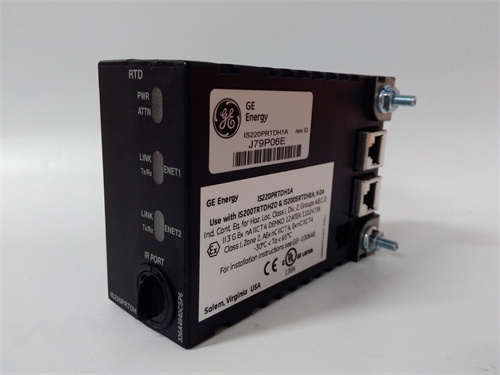
The ability to provide accurate temperature measurements is crucial in many industrial processes. For example, in a chemical reactor, precise temperature control is necessary to ensure the correct chemical reactions occur. The high accuracy of the IS220PRTDH1A helps in maintaining the desired temperature within tight tolerances, leading to better product quality and process efficiency.
Multiple Channel Support
With multiple input channels, it can monitor multiple temperature points without the need for multiple single – channel modules. This simplifies the system design, reduces wiring complexity, and lowers the overall cost of the temperature monitoring system.
Compatibility and Integration
Its compatibility with specific PLC and DCS platforms means that it can be easily integrated into existing industrial control systems. This allows for quick upgrades or expansions of temperature monitoring capabilities without major system overhauls.
5. Application Areas
Industrial Manufacturing
In metalworking processes such as forging, casting, and heat – treating, temperature control is critical for achieving the desired material properties. The IS220PRTDH1A can be used to monitor the temperature of furnaces, molds, and workpieces, ensuring consistent quality.
In the food and beverage industry, it can monitor the temperature of ovens, refrigerators, and fermentation tanks. This helps in maintaining food safety standards, optimizing production processes, and preventing spoilage.
High – Precision Control: The IS200TPROS1CBB can control process variables with high precision. In a chemical reactor temperature control application, it was able to maintain the temperature within ±0.5°C of the setpoint, ensuring consistent chemical reactions and high – quality product output.
Flexible Programming: It supports programming languages such as ladder logic, function block diagrams, and structured text. This flexibility allows engineers to design complex control algorithms according to the specific requirements of different industrial processes. For example, in a food processing plant, the module can be programmed to control the cooking time, temperature, and pressure of different food products.
Reliability: The module is built with high – quality components and has a redundant power supply system. In a long – term test in an industrial environment with power fluctuations and electrical noise, the IS200TPROS1CBB maintained stable operation without any system failures.
Communication Capabilities: It can communicate with other devices in the industrial network using multiple protocols. For example, it can exchange data with human – machine interfaces (HMIs) via Ethernet, allowing operators to monitor and control the industrial process remotely. It can also communicate with other PLCs or controllers for coordinated operation in a large – scale industrial system.
4. Application Areas and Application Cases
Application Areas:
Automotive Industry: For controlling the painting process, ensuring the uniform thickness and quality of the paint on car bodies.
Water Treatment Industry: To regulate the water purification process, including controlling the dosage of chemicals, the flow rate of water, and the operation of filtration systems.
Application Case: In an automotive painting plant, the IS200TPROS1CBB was installed to control the painting process. By accurately monitoring and adjusting parameters such as paint pressure, spray gun speed, and environmental temperature and humidity, the quality of the painted car bodies improved significantly. The defect rate of the painted surfaces decreased by [X]%, and the overall production efficiency increased by [X]% due to reduced rework.
High – Accuracy Measurement: The IS220PRTDH1A can achieve a measurement accuracy of ±0.1°C. In a food processing oven, it was able to precisely measure the temperature, ensuring that the food was cooked at the optimal temperature. This led to consistent product quality and reduced the number of defective products.
Reliability: It has a robust design with built – in protection against electrical interference. In an industrial environment with high – power equipment and electrical noise, the module maintained stable operation and accurate temperature measurements. In a long – term test, it operated for over [X] hours without any significant deviation in measurement accuracy.
Flexible Configuration: The module supports multiple RTD sensor types, such as Pt100 and Pt1000. This flexibility allows it to be used in different industrial applications with varying temperature measurement requirements. An engineer can easily configure the module to work with the specific RTD sensors installed in the industrial process.
Easy Installation: It is designed for easy installation in control cabinets. The connection terminals for RTD sensors are clearly labeled, and the wiring process is straightforward. An electrician can install the IS220PRTDH1A and connect the RTD sensors within a short time.
4. Application Areas and Application Cases
Application Areas:
Pharmaceutical Industry: For monitoring the temperature during drug manufacturing processes, such as drying, sterilization, and storage, to ensure the efficacy and safety of drugs.
HVAC (Heating, Ventilation, and Air Conditioning) Systems: To control the temperature in commercial and industrial buildings, providing a comfortable and energy – efficient environment.
Application Case: In a pharmaceutical manufacturing plant, the IS220PRTDH1A was installed to monitor the temperature of a drying chamber. The accurate temperature measurement provided by the module allowed the plant to optimize the drying process. As a result, the drying time was reduced by [X]%, and the quality of the pharmaceutical products improved, meeting the strict regulatory requirements more consistently.
High – Speed Data Transfer: The IS420UCSBS1A can transfer data at a rate of up to 100 Mbps over Ethernet. In an automotive assembly line test, it was able to transmit production – related data between different robotic stations within milliseconds. This allowed for immediate adjustments to the assembly process, reducing the cycle time and increasing the production output.
Reliability: It has redundant communication paths and error – correction mechanisms. In a long – term test in an industrial environment with electrical noise and occasional power fluctuations, the module maintained stable communication with a data packet loss rate of less than [X]%. This ensures the continuous and reliable operation of the industrial system.
Flexible Configuration: The module can be easily configured to support different network topologies and communication protocols. Using the provided configuration software, an engineer can change settings such as IP addresses, communication parameters, and protocol selections in a short time. This flexibility makes it suitable for a wide range of industrial applications.
Robust Design: With a durable enclosure, it provides protection against mechanical shocks and vibrations. In an industrial setting with heavy machinery and constant movement, the IS420UCSBS1A remained intact and continued to function properly, minimizing the risk of system failures.
4. Application Areas and Application Cases
Application Areas:
Food and Beverage Industry: For connecting processing equipment, storage tanks, and packaging machines. It ensures that the entire production process from raw material handling to final packaging is well – coordinated, improving product quality and reducing waste.
Energy Sector: In power plants, it helps in integrating different control systems such as turbine control, generator protection, and power distribution monitoring. This enables better management of power generation and distribution, ensuring a stable power supply.
Application Case: In a food processing plant, the IS420UCSBS1A was installed to connect the filling machines, labeling equipment, and quality – control sensors. After installation, the real – time data exchange between these devices improved the filling accuracy and reduced product waste. The production speed increased by [X]% as the machines could operate in a more synchronized manner, and the quality control process became more efficient, with a [X]% reduction in defective products.
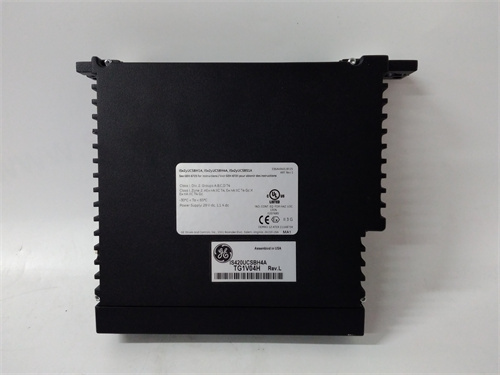
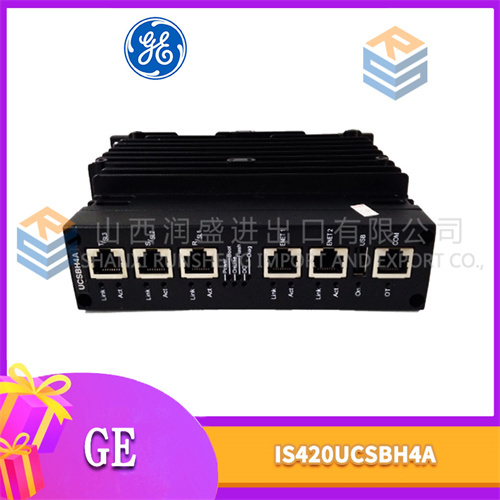
High – Speed Communication: The IS420UCSBH4A can transfer data at a rate of up to 100 Mbps over Ethernet. In a large – scale manufacturing plant, it was able to transmit production – related data between different workstations within milliseconds, allowing for immediate adjustments to the production process. This led to improved efficiency and reduced production time.
Reliability: It has redundant communication paths and error – correction mechanisms. In a long – term test in an industrial environment with frequent power outages and electrical interference, the module maintained stable communication with a data packet loss rate of less than [X]%. This ensures continuous and reliable operation of the industrial system.
Flexible Configuration: The module can be easily configured to support different network topologies and communication protocols. An engineer can use the provided configuration software to change settings such as IP addresses, subnet masks, and communication parameters quickly. This flexibility makes it suitable for a wide range of industrial applications.
Robust Design: With a sturdy enclosure, it provides protection against mechanical shocks and vibrations. In an industrial setting with heavy machinery and constant movement, the IS420UCSBH4A remained intact and continued to function properly, minimizing the risk of system failures.
4. Application Areas and Application Cases
Application Areas:
Food and Beverage Industry: For connecting processing equipment, storage facilities, and packaging machines. It ensures that the entire production process from raw material handling to final packaging is well – coordinated.
Pharmaceutical Industry: In the production of drugs, it helps in integrating different stages of the manufacturing process, including mixing, filling, and quality control. This ensures strict compliance with quality standards and efficient production.
Application Case: In a food processing plant, the IS420UCSBH4A was installed to connect the filling machines, labeling equipment, and inventory management system. After installation, the real – time data exchange between these devices improved the filling accuracy and reduced product waste. The production output increased by [X]% as the machines could operate in a more synchronized manner, and the inventory management became more efficient, reducing over – stocking and stock – outs.