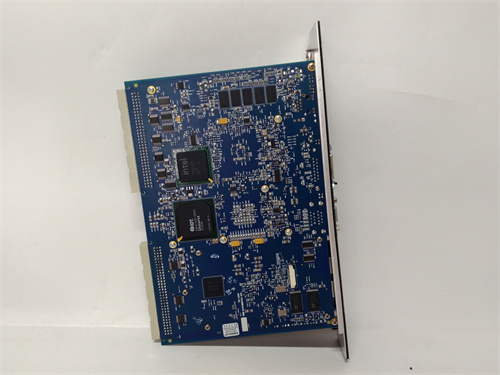
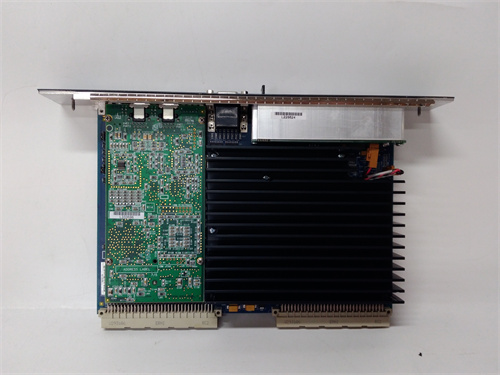
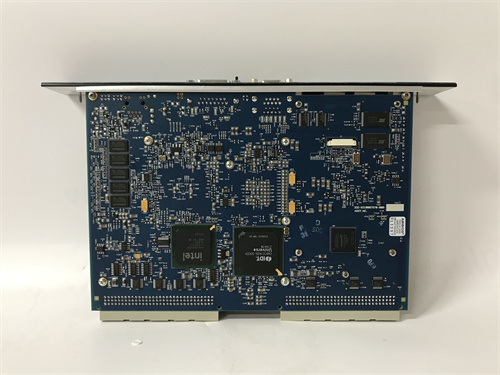
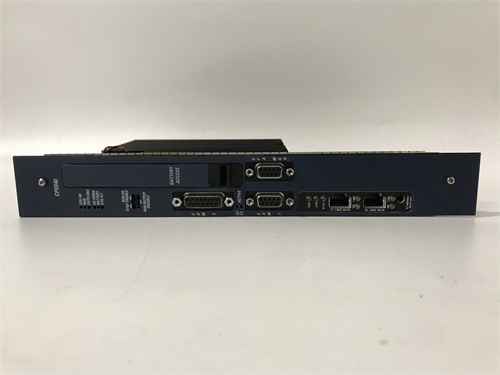
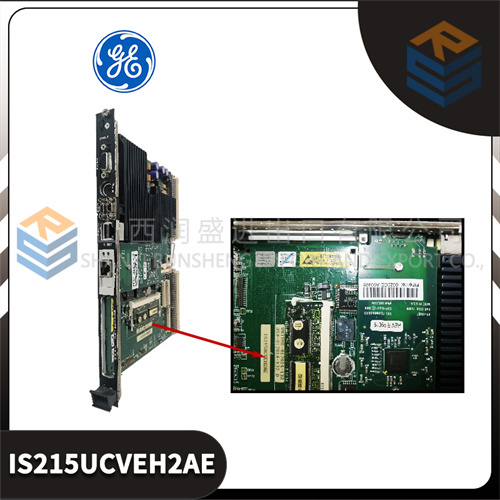
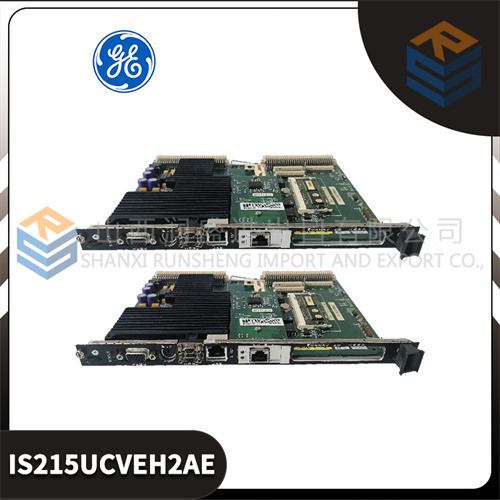
Equipped with a high-speed microprocessor, the clock speed reaches 1.8 GHz.
With a scan rate of 0.024 milliseconds per 1000 Boolean contacts/coils, it is able to respond quickly and process various instructions.
Storage capacity:
High capacity random access memory (RAM) and non-volatile memory, both up to 64MB, help to process and store large amounts of data quickly.
Communication interface:
It is equipped with embedded communication ports, including two serial communication ports supporting RS232 and RS485 communication standards and two RJ45 ports for Ethernet connectivity.
It supports 10/100 Mbps half-duplex/full-duplex transmission rate and has automatic sensing capability.
The serial port supports protocols such as Modbus RTU slave and SNP, allowing it to communicate and collaborate with other devices.
specification
Voltage requirements: AC100 to 220V, allowing voltage fluctuations of ±10% to -15%, while supporting 50/60Hz power frequency.
Use environment:
Ambient temperature: Optical fiber cover, optical fiber line: -25°C to +200°C; Amplifier: -25°C to +50°C.
Storage temperature: -40°C to +70°C (non-condensing).
Frequency: There are different statements, there is a mention of 1.6 GHz, there is also a mention of 1.8 MHz, but considering the unit difference between MHz and GHz, 1.8 MHz may be a mistake, more likely 1.8 GHz. In addition, it is also indicated that the rated frequency is 1800 MHZ (1.8 GHz).
Memory: Equipped with 64 MB of user memory and 64 MB of user flash memory.
specification
Voltage and current: Load requirements are 8.5 amps at 6 volts DC and 12.12 amps at 0 volts DC and -0.03 volts DC. It is also stated that the load is 6.8 amps at 5 volts DC and 0.003 amps at 12 volts DC and -12 volts DC.
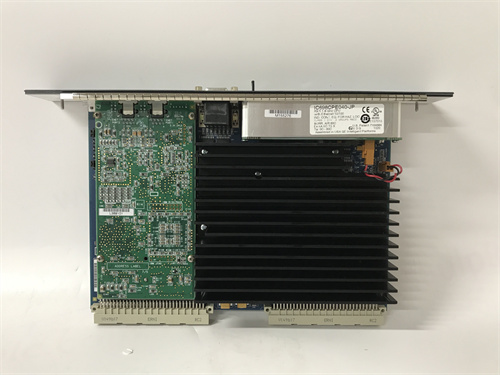
Communication interface: including Ethernet interface and multiple serial ports (such as RS-232, RS-485). These ports are independent and isolated and can be accessed from the connector on the front of the CPU.
Rack-mounted backplane design: allows communication between the IC698CPE040 and input/output and intelligent option modules in the VME64 standard format.
Parameters and specifications
Purpose: Used to provide control level power supply for drivers and cabinet fans.
Operating voltage: The input voltage range may include 85~264VAC and the output voltage is 24VDC.
Output power: 360W.
Maximum output current: 15A.
Operating temperature range: -25~70℃.
Size and weight
Dimensions: Approx. 115mm x 48mm x 150mm
Weight: About 1.2kg
Power supply specification: Rated voltage is 18~36V DC, power is 12 watts
Operating temperature: between 0 and 65 degrees Celsius
Communication interface: Contains multiple female jack connectors, one USB port, and supports Ethernet connection
specification
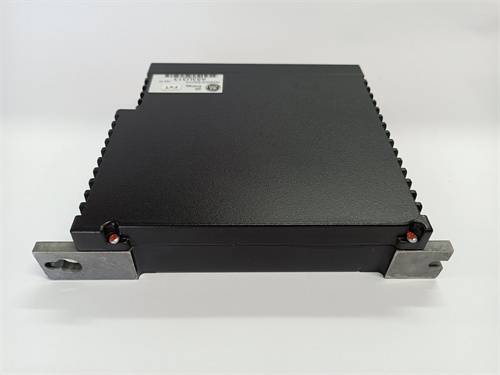
Design: Individual boxed assembly, front panel allowing connection communication, rear edge with two screw mounting, three side grille openings allowing air flow, designed for base mounting in cabinet
Cooling method: Natural cooling, no fan required
Application level: complies with NFPA Class 1 zone 2 specifications
argument
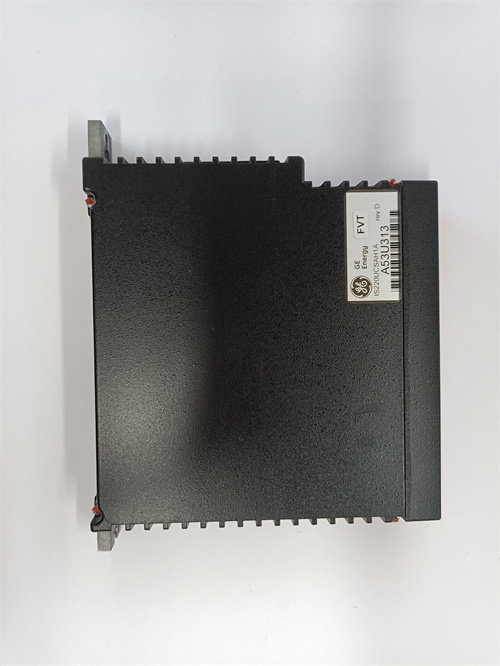
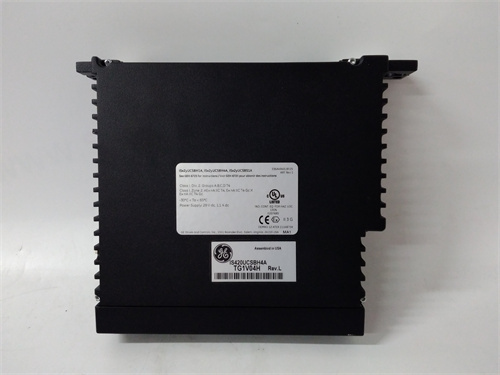
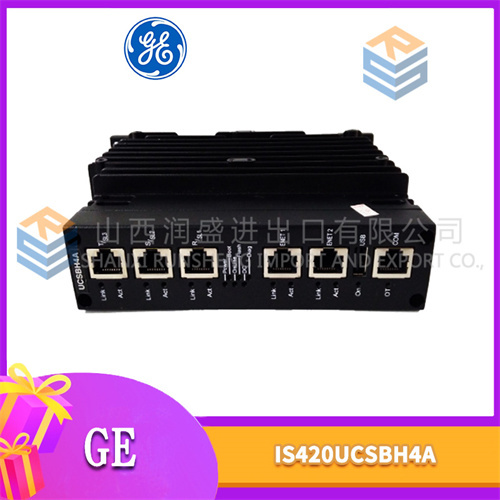
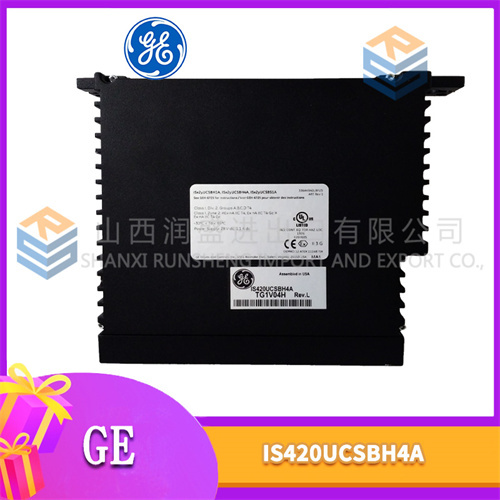
Component number: IS420UCSBH4A
Manufacturer: General Electric (GE)
Country of Manufacture: USA
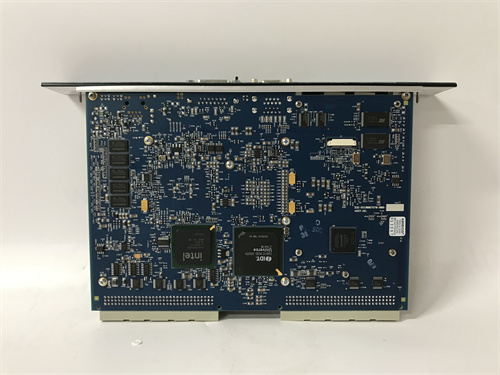
Microprocessor: 600MHz Intel processor with 1066MHz Intel EP80579 microprocessor for gas turbine control system
Memory: 256 MB DDR2 SDRAM
Operating system: QNX Neutrino, a real-time multitasking operating system developed specifically for industrial applications that require high speed and reliability
specification
Series: Mark VIe series
Function: UCSB controller
Communication interface: On-board IONet (Industrial Ethernet) interface to support connection and communication with other devices and systems
Input/output channels: Multiple input and output channels are capable of monitoring multiple process variables and performing related actions
argument
Processor architecture: Pentium M microprocessor
Main frequency: 1.6GHz (some data mention 1.8MHz, but it may be a clerical error, because MHz and GHz are far different)
User memory: 64 MB
User flash: 64 MB
Rated voltage: Multiple voltage ranges, including 5V, 12V, 24V and -24V DC
Load requirements: 8.5 amps at 6V DC, 12.12 amps at 0V DC and -0.03V DC (6.8 amps at 5V DC, 0.003 amps at 12V and -12V DC, according to another source)
specification
Series: RX7i PACSystem (Some sources mention RX3i PACSystem, but this may be early information)
Communication interface: Ethernet, serial communication (including RS-232 and RS-485)
Rack backplane design: supports the VME64 standard format
Firmware upgrade port: Three separate and isolated serial ports, two of which are used to upgrade firmware or create serial interfaces with external devices, and the third is a station management port for Ethernet interfaces
Operating temperature range: -40℃~ +85℃ (some data mentioned -25 ℃~ 70℃, but this range may be suitable for specific environments or versions)
Input voltage: 5VDC (another reference to the input voltage range of 10~30VDC, may refer to the supply voltage range)
Power consumption: 10W (another source mentions an output power of 360W, which may refer to the power consumption of the entire system or device, rather than a single module)
Network transfer rate: 43 Mbyte/s(4-byte packet) to 170 Mbyte/s(64-byte packet)
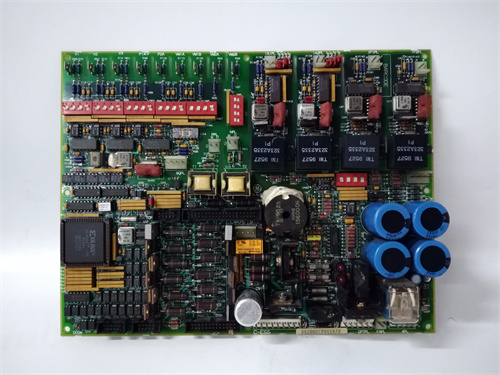
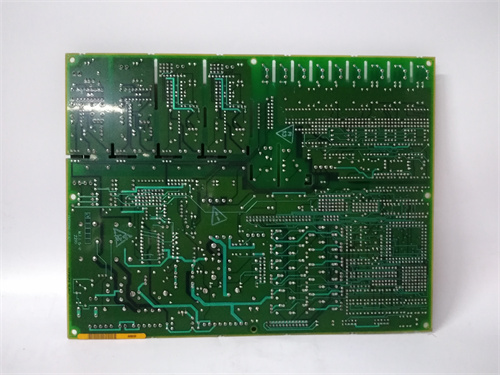
The IS200TRPGH1B is part of the General Electric (GE) Mark VI series.
The board supports the data transfer instruction MOV(21) and the data reverse transfer instruction MOVN(22), which provide flexible options for data transfer. When the state before MOV is ON, MOV instruction is executed to transfer the source data to the target channel; When the state is OFF, the MOVN command is executed to reverse the source data and send it to the target channel.
The circuit board also has the setting and resetting function of the carry marker relay 25504, which is very important for the execution of addition and subtraction operations to ensure the correct calculation results.
argument
Component number: IS420UCSBH4A
Manufacturer: General Electric (GE)
Country of Manufacture: USA
Microprocessor: 1066 MHz Intel EP80579
Memory: 256 MB DDR2 SDRAM
Operating system: QNX Neutrino (Real-time multitasking operating system)
specification
Function: UCSB controller for gas turbine control systems
Modular design: easy to expand and upgrade, improve system flexibility and maintainability
Multiple input and output channels: The ability to monitor multiple process variables and perform related operations to meet complex control needs
Communication interface: Equipped with Ethernet or serial communication interface to achieve connection and communication with other devices or systems